Production notes
A photo cannot show the inside of the body.A 3D image can.
Campaign posters, patient brochures, congress materials, product visuals: healthcare needs images of things that cannot be photographed. 3D rendering creates them from a scene that then serves every format.
In short: 3D rendering produces still images of what cannot be photographed (organs, cells, mechanisms, the inside of a device) and of a product before it is made. One 3D scene serves posters, brochures, booths and web pages, then the film if needed. The style that reads best is educational or semi-realistic. One image from one angle costs €450 to €600 excl. VAT.
What a photo cannot show
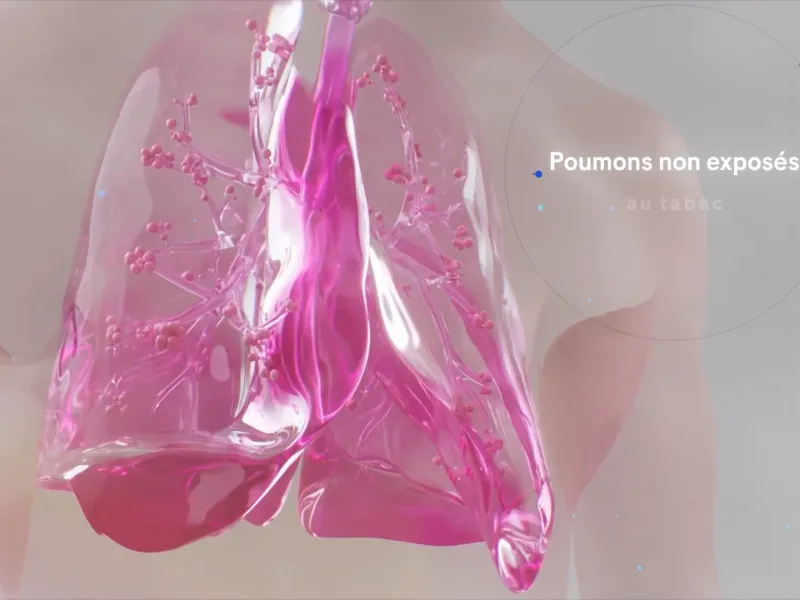
The inside of an organ, a cell, the way a molecule acts: photography and medical imaging do not give the public a readable image. 3D rendering builds that image, with the framing, lighting and level of detail you choose.
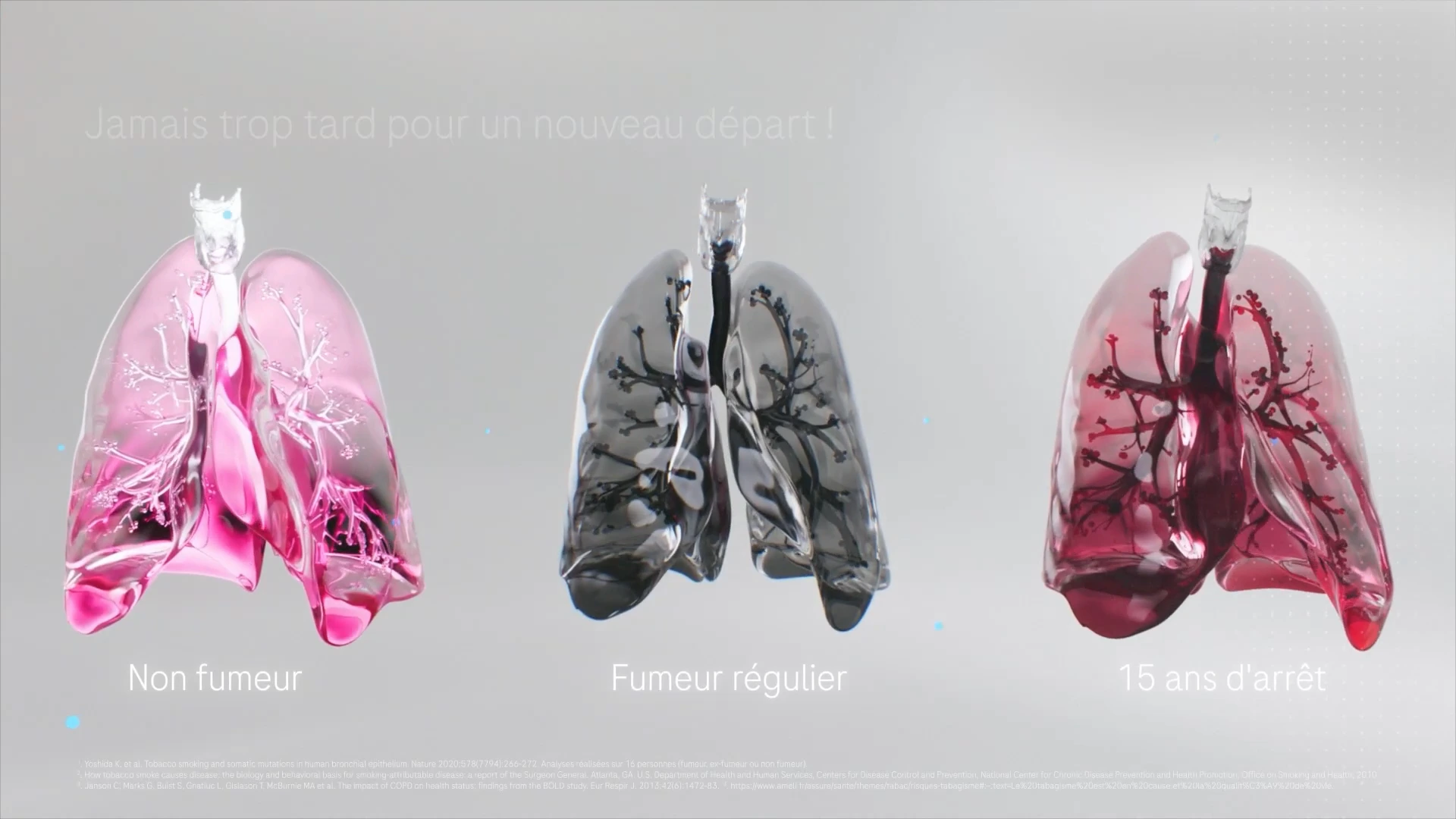
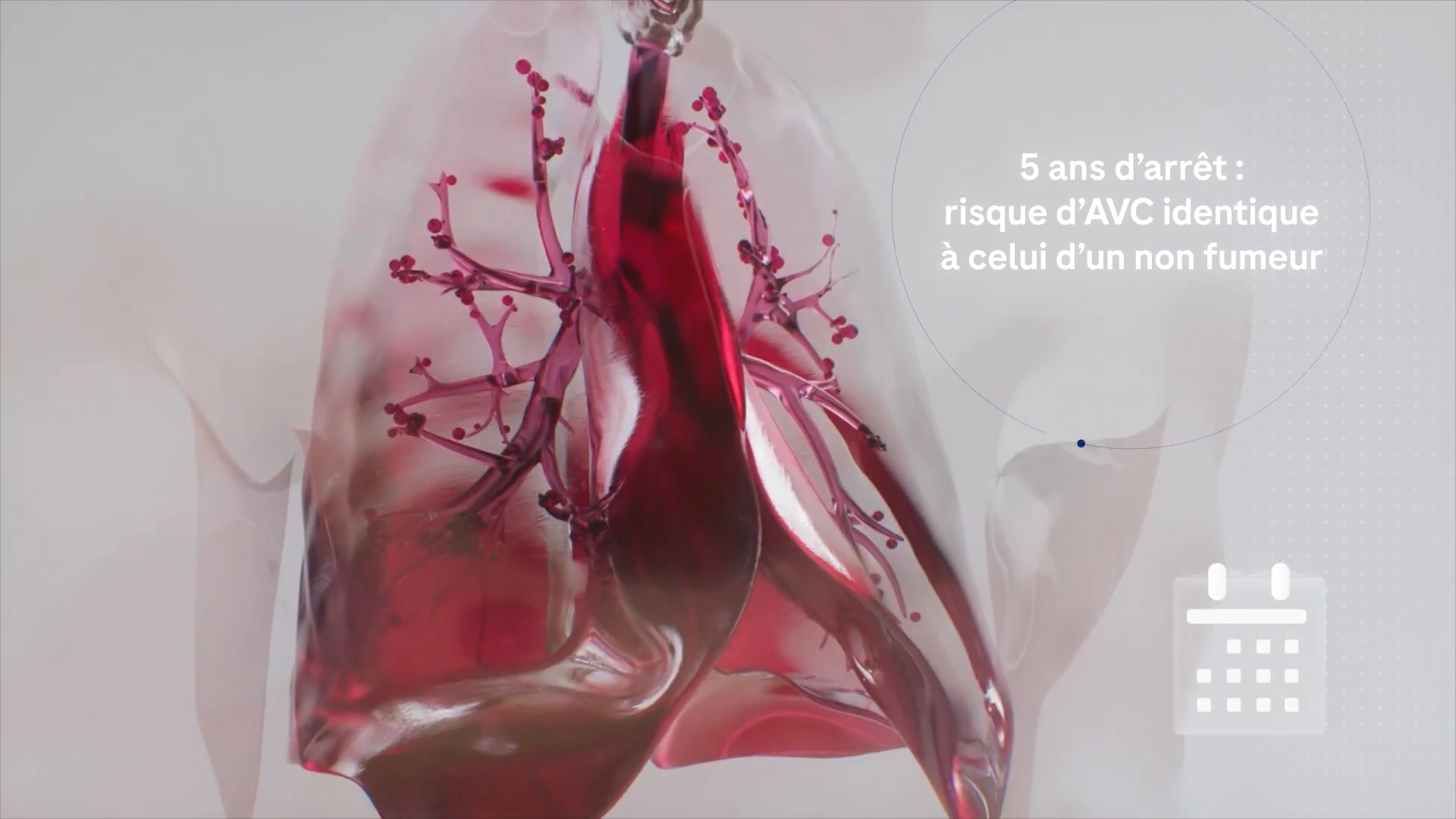
A single image can compare several conditions. In Roche France’s Novembre Perle film, one image brings together the lungs of a non-smoker, of a regular smoker and of someone who quit 15 years ago.
One image, one message
An effective medical image carries one message. The framing isolates what matters, color separates the conditions, the annotation states what to remember.
The same 3D scenes produce images in several formats: printable posters, social media visuals, booth screens. The Novembre Perle film was delivered with posters taken from its scenes.
The medicine and the device
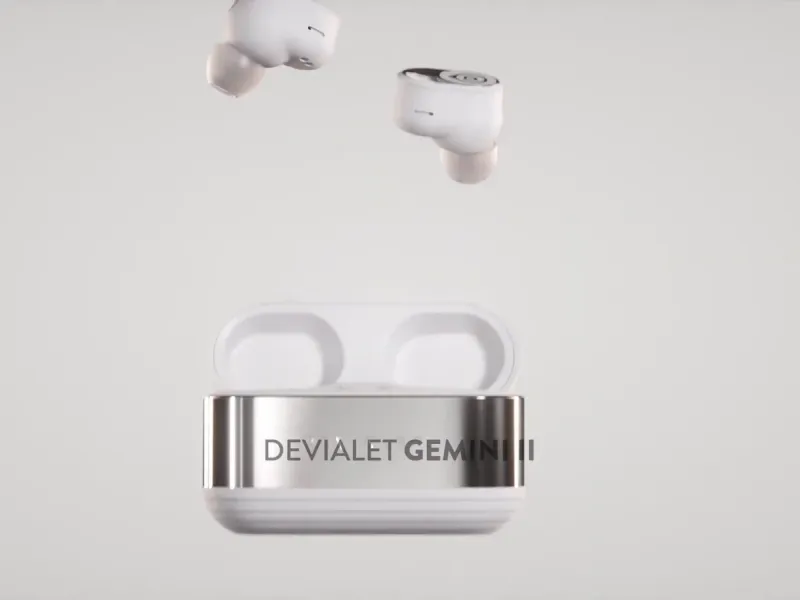
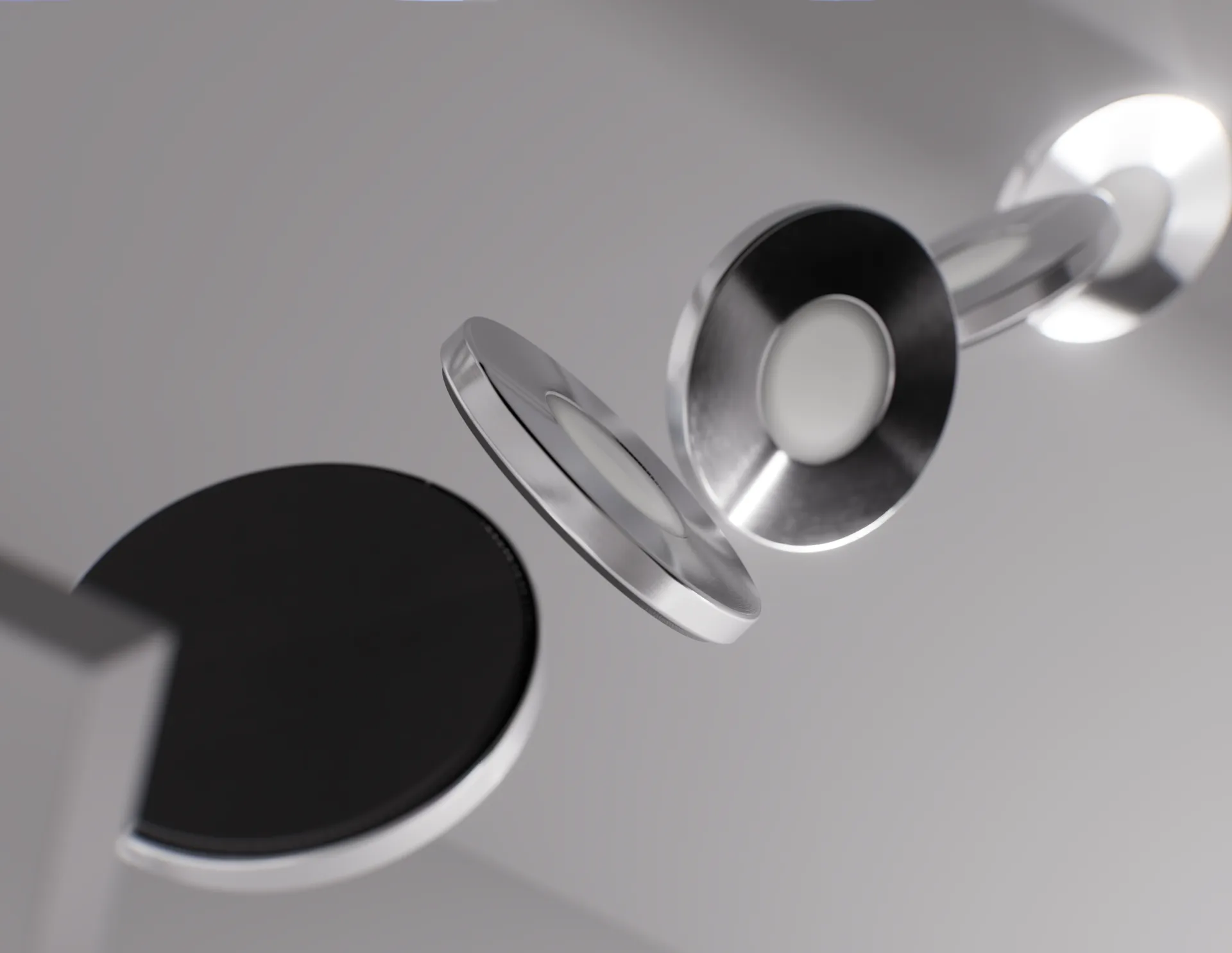
Packs, vials, blister packs, injector pens, inhalers: a 3D packshot shows the product from every angle, even before it is made. One scene can be adapted by dosage, language or country without a new shoot.
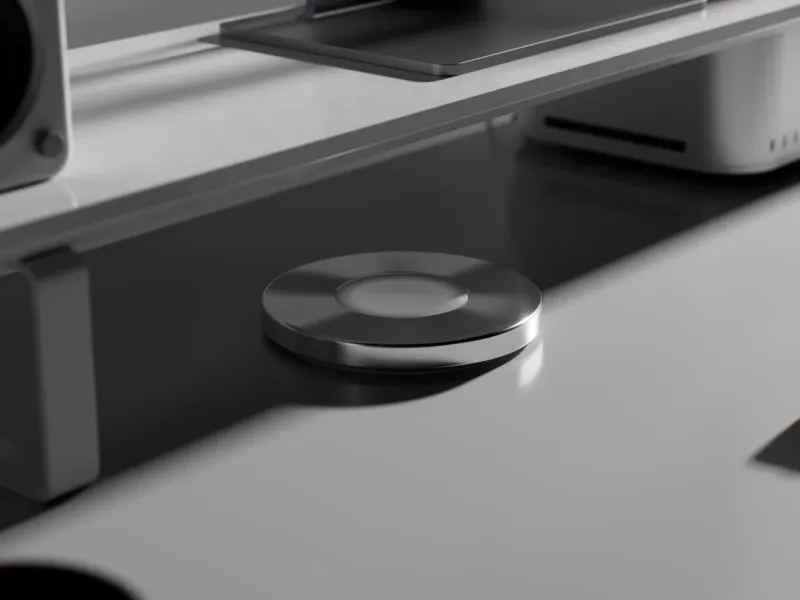
For a device, an exploded view separates the parts and transparency shows the inside. These views are built from the CAD file, like those of the Norma disc. The text and statements on the packaging are supplied by the client.
Which style to choose: educational or semi-realistic
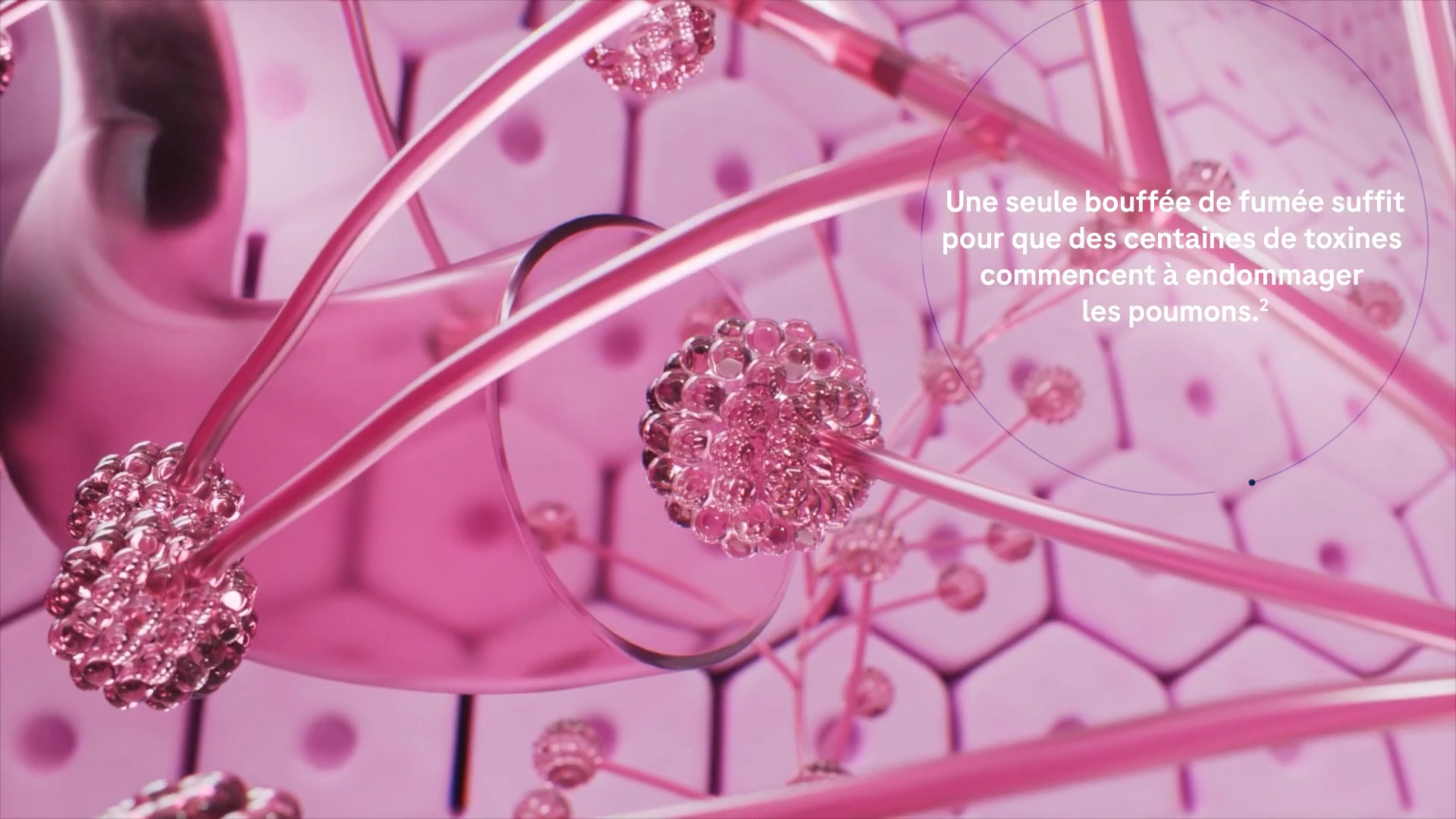
My advice for a healthcare image: an educational or semi-realistic style. The organ is recognized by its shape; its materials and colors are simplified so the message comes across at a glance, without a shocking image.
Research qualifies the idea that more realistic means clearer. A review published in 2021 in Educational Psychology Review notes that in several studies, more abstract illustrations led to better results than realistic versions. It separates three dimensions of realism, geometry, shading and rendering, which can be set independently.
In the Novembre Perle film, the cells and alveoli take the form of pink glass volumes: the structure stays accurate, the material stays simple.
Approve before the final render
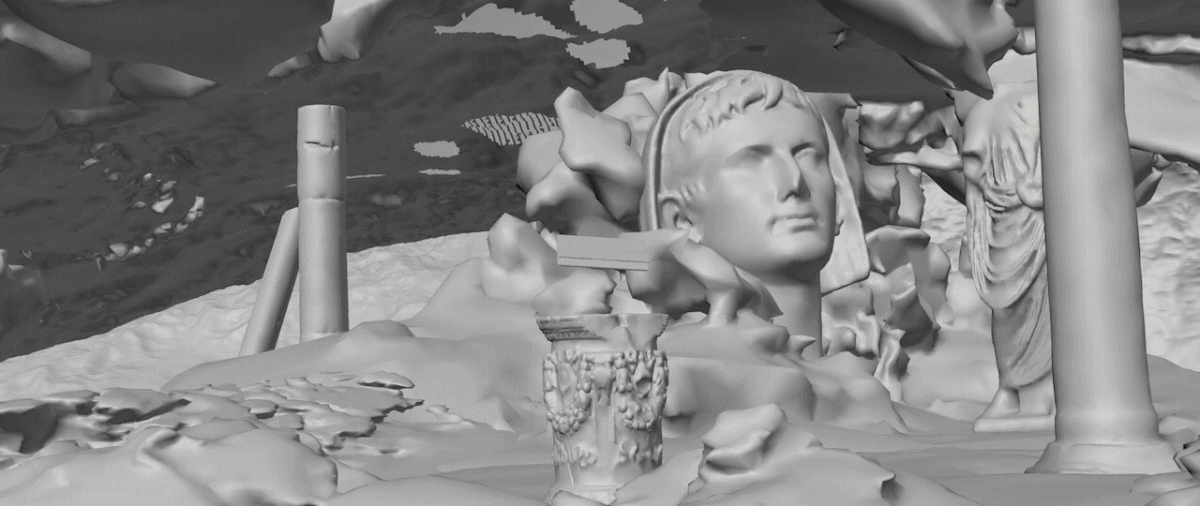
Before the final renders, I share previews: the scene in clay, without materials, to approve framing and shapes, then still images to approve style and colors.
These steps leave time for the client’s medical, legal and regulatory review. In France, an advertisement for a medicine goes through an ANSM visa, filed during set periods each year: the image schedule is planned around those dates.
What I offer
I create 3D images in Cinema 4D and Octane: organs, mechanisms, healthcare products and devices, with previews to approve before the final render. The scientific content is still supplied and approved by your medical team.
One image from one angle costs €450 to €600 excl. VAT, three angles €700 to €1,100 excl. VAT. A series of campaign images or complex anatomical scenes is quoted.
Where this information comes from
Research: A. Skulmowski, S. Nebel, M. Remmele and G. D. Rey, “Is a Preference for Realism Really Naive After All?”, Educational Psychology Review, 2021, abstract read on October 27, 2026.
Regulation: ANSM pages on advertising visas for medicines and the October 22, 2025 decision setting the 2026 filing periods, read on October 27, 2026. The examples describe images published on this site.