Production notes
3D rendering or product photography.Two tools, not two camps.
Photography and 3D solve different problems. The right choice depends on your product, how far along it is, and where the images will run.
In short: if the product exists and needs to be shown worn, in use or in a real setting, a photo is often the better choice. If the product isn’t manufactured yet, comes in many variants, or needs a view a camera can’t capture, 3D takes over. The two work well together.
What I offer: 3D product renders made in Cinema 4D and Octane Render, directly for brands or as backup for agencies, photo studios and photographers.
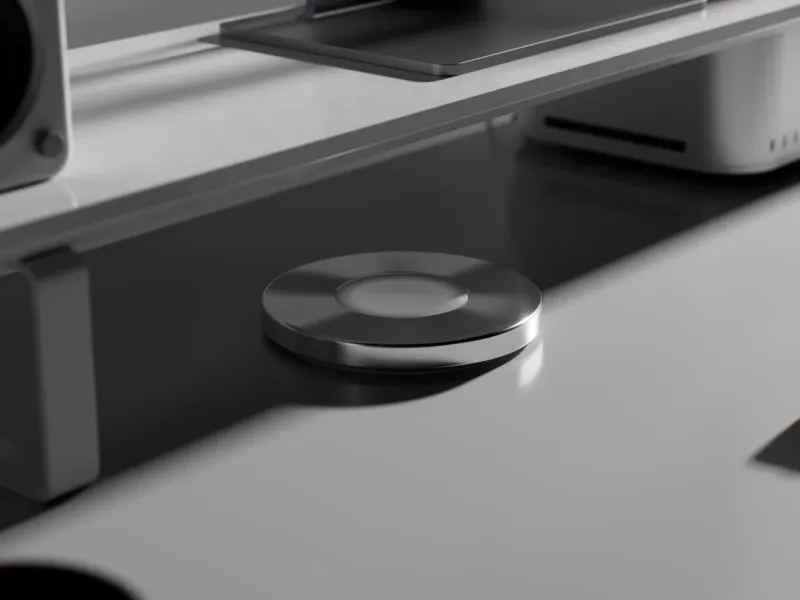
Product photography and 3D rendering, side by side
| Criterion | Product photography | 3D PackshotMe |
|---|---|---|
| Product must exist | Yes, a physical unit | No: a 3D file, drawings or photos are enough |
| Models, hands, real lifestyle | Its natural ground | Possible but slower, and rarely the best option |
| Organic materials (food, flowers, worn fabric) | Natural result straight from the shoot | Doable, with more tuning |
| Color or finish variants | Usually one unit and one shot per variant | A material swap in the same scene |
| Exploded view, see-through, cutaway | Hard or impossible | Doable |
| Same angle and lighting across a range | Needs a strict studio setup | The scene is reused as is |
| Changes after approval | Retouching, or a reshoot | Edit the scene, then render again |
| Starting price | Quoted by the photographer or studio | From €450 excl. VAT per image (my rates) |
When photography is still the right call
The product is made and on hand: a photographer can shoot it quickly, with no modeling step.
The image shows people: a model, hands, a gesture. Photography captures those details naturally.
Organic materials such as food, flowers or worn fabric, and real-life scenes photograph very well. Recreating them in 3D is possible, but rarely the shortest path.
When 3D takes over
The product doesn’t exist yet: a prototype in progress, a launch to prepare, a pre-order. A 3D file or drawings are enough to produce the images.
The range comes in many colors or finishes: once the scene is set, each variant is a material swap, with the same angle and the same lighting.
The shot can’t be photographed: an exploded view, a part seen through the shell, a cutaway, a camera moving through the product.
The design changes late: the scene is edited and rendered again, without a reshoot.
Combine the two
Many projects mix the two. Photography covers lifestyle and models; 3D covers product pages, variants and technical views.
3D can also fill gaps in a shoot: a missing colorway, a product not yet delivered, a shot that couldn’t be done on the day.
For the images to match, the simplest approach is to share lighting, angle and background references before starting.
What a 3D product render costs
In 3D, most of the cost sits in the first image: modeling, materials, lighting. Extra angles and variants cost less, because the scene already exists.
My rates: €450–600 excl. VAT for one image from one angle, €700–1,100 excl. VAT for 3 angles, €900–1,800 excl. VAT for an animation up to 15 seconds.
The price of a photo shoot depends on the photographer, the studio, the styling and the retouching. The most reliable way is to request a quote for the same deliverable and compare.
Backup for agencies, studios and photographers
I don’t replace photography: I also work as backup for agencies, photo studios and photographers. When a product isn’t available or a shot can’t be photographed, I handle the 3D part.
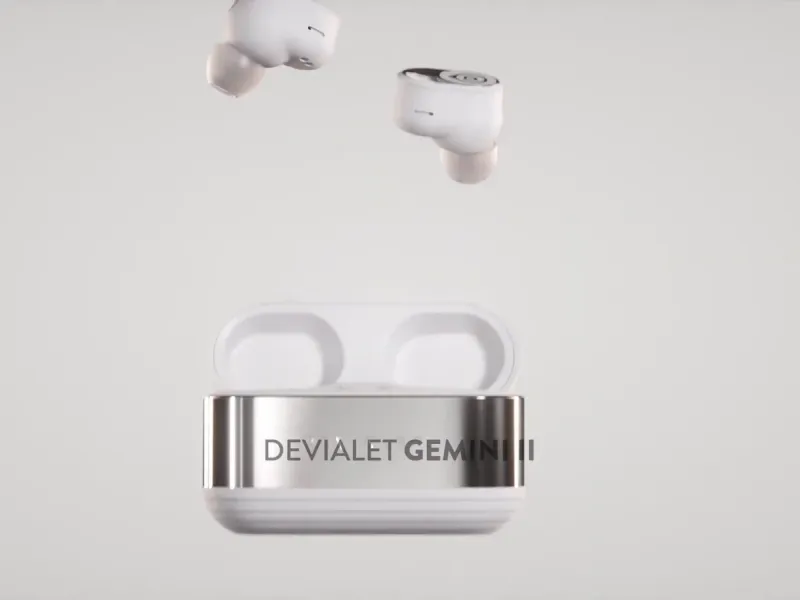
I can work white-label and sign an NDA depending on the contract. For example, I made the CGI film for the Devialet Gemini II earbuds as a subcontractor for LPC Studio.
I work in Cinema 4D and Octane Render, with previews to approve before the final render and one point of contact from brief to delivery. Based in Rouen, France, I work remotely, including with US teams.
Frequently asked questions
Can a 3D render replace all my photos?
Not always. For models, hands or real-life scenes, photography is often simpler. 3D is most useful for products not yet manufactured, variants and impossible views.
Can photos and 3D renders live on the same site?
Yes. Sharing lighting, angle and background references keeps the images consistent.
Do you work for photographers or agencies?
Yes, as backup or as a subcontractor, white-label if needed. An NDA is possible depending on the contract.
How fast is a 3D render delivered?
A packshot can be delivered in a few days. A full CGI project takes 2 to 6 weeks on average.