Production notes
What happens inside the body cannot be filmed.3D animation shows it.
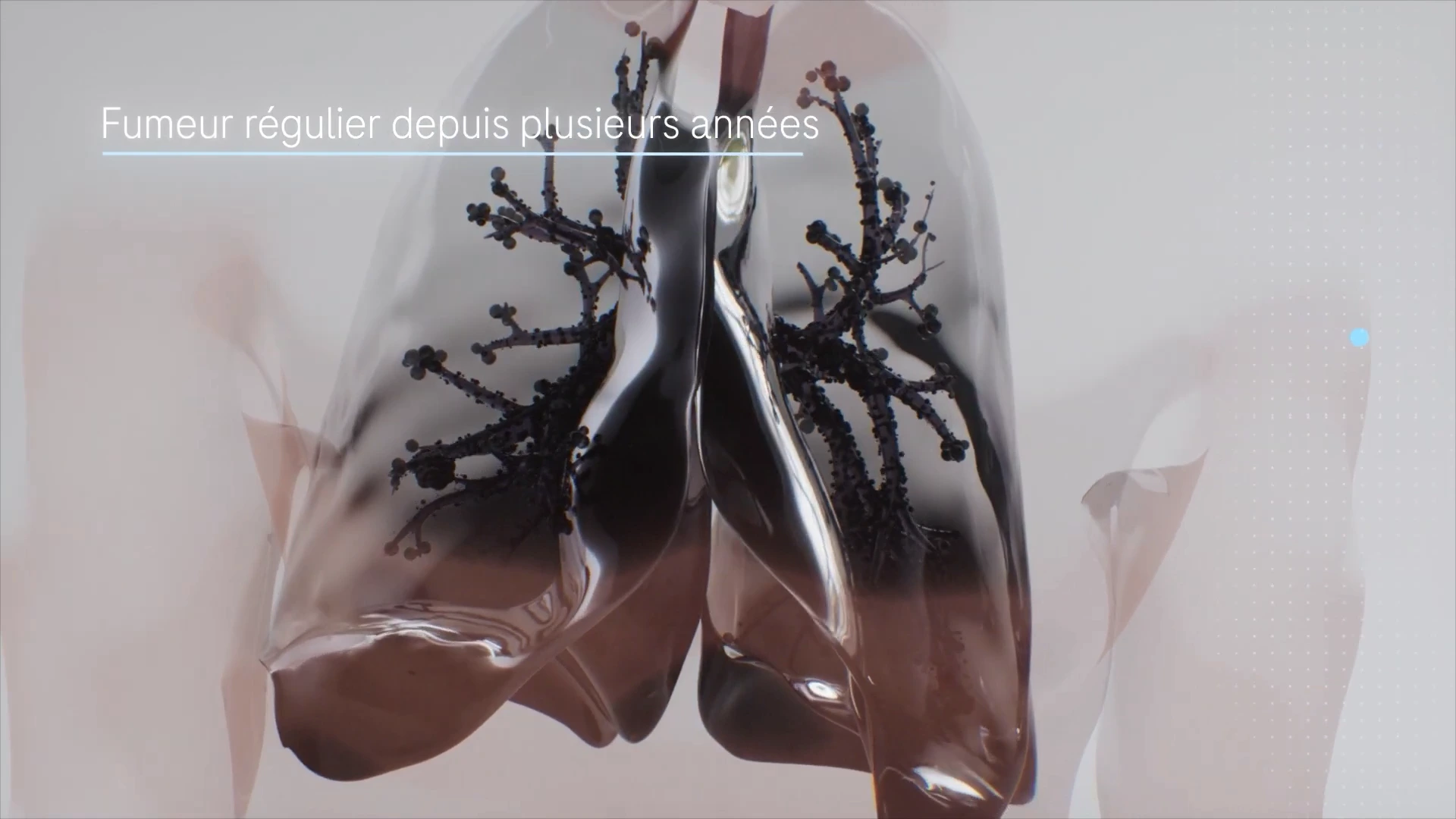
A molecule binding to its target, a bronchus turning black, a pen delivering a dose: none of this can be filmed with a camera. Pharmaceutical companies, biotechs, medical device makers and healthcare communication agencies use 3D animation to show it.
In short: 3D animation shows what a camera cannot see (mechanisms, organs, cells, the inside of a device) and makes it clear in a few seconds, to patients and doctors alike. The style that is easiest to understand is educational or semi-realistic: accurate anatomical shapes, simplified materials. The scientific content is still approved by the client’s medical team.
Show what cannot be filmed
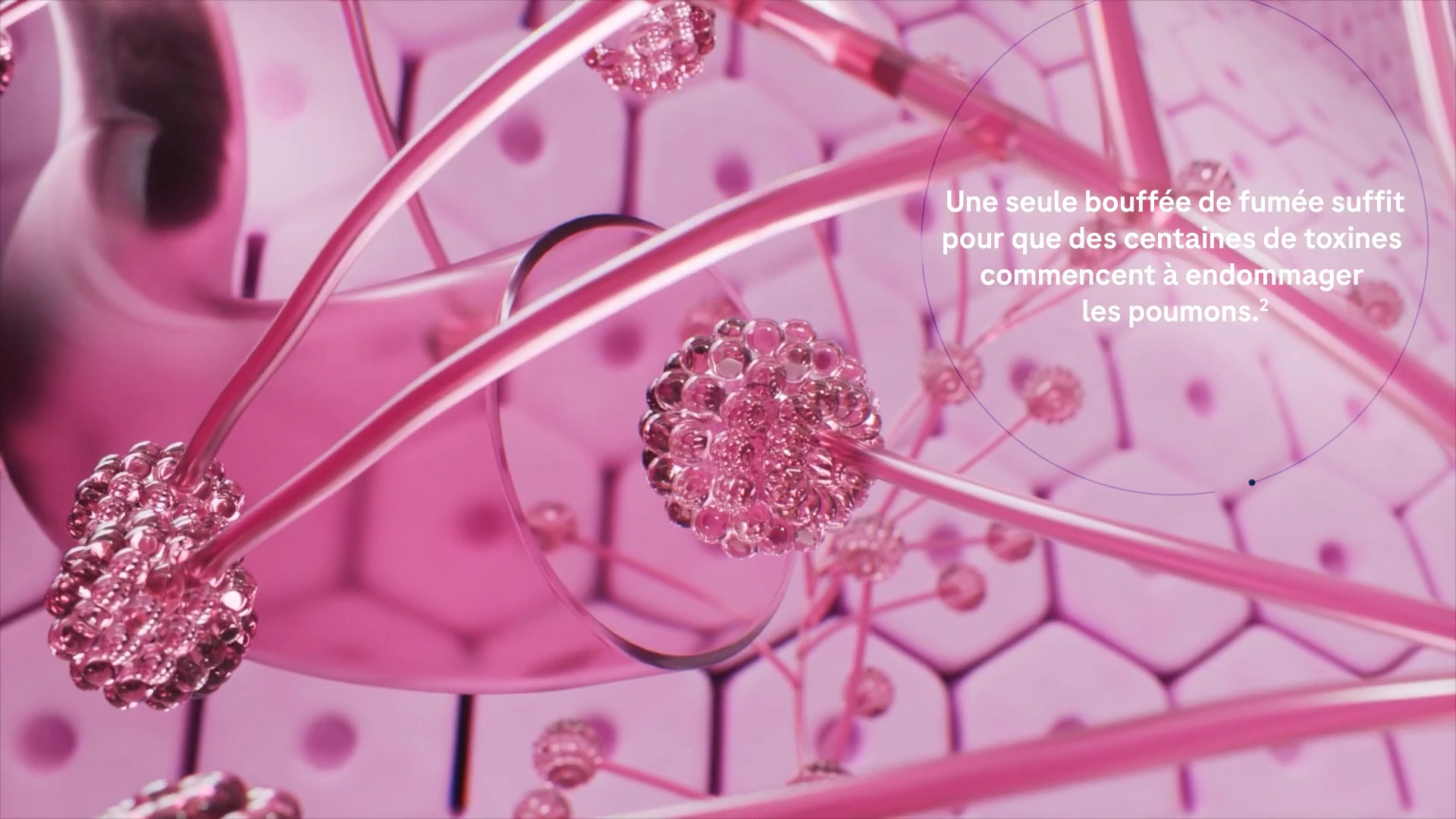
At the scale of a cell or a molecule, there is no filmed image the public can read. 3D builds a representation: it chooses the scale, the angle, the speed and what stays visible.
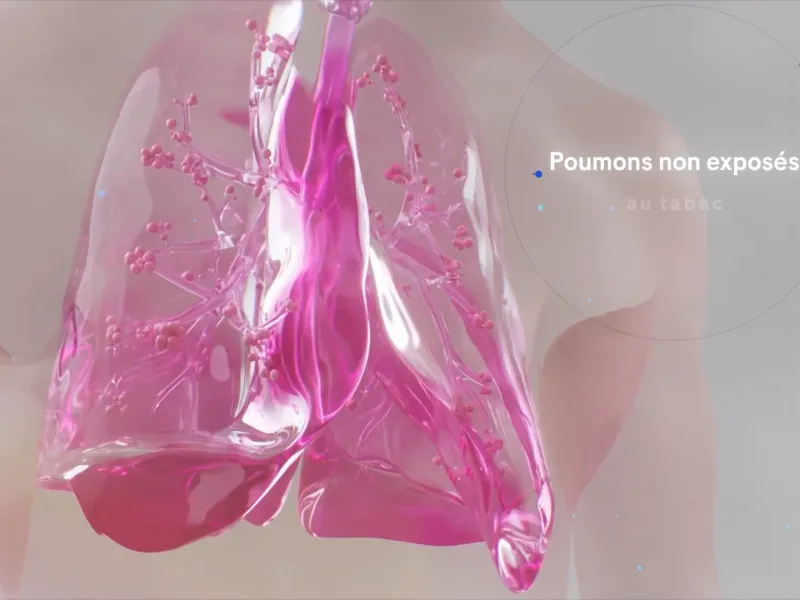
A single shot can move from the whole body to the organ, then to the cell. In Roche France’s Novembre Perle film, the camera moves from the torso to the lungs, then dives down to the alveoli.
Tell a change over time
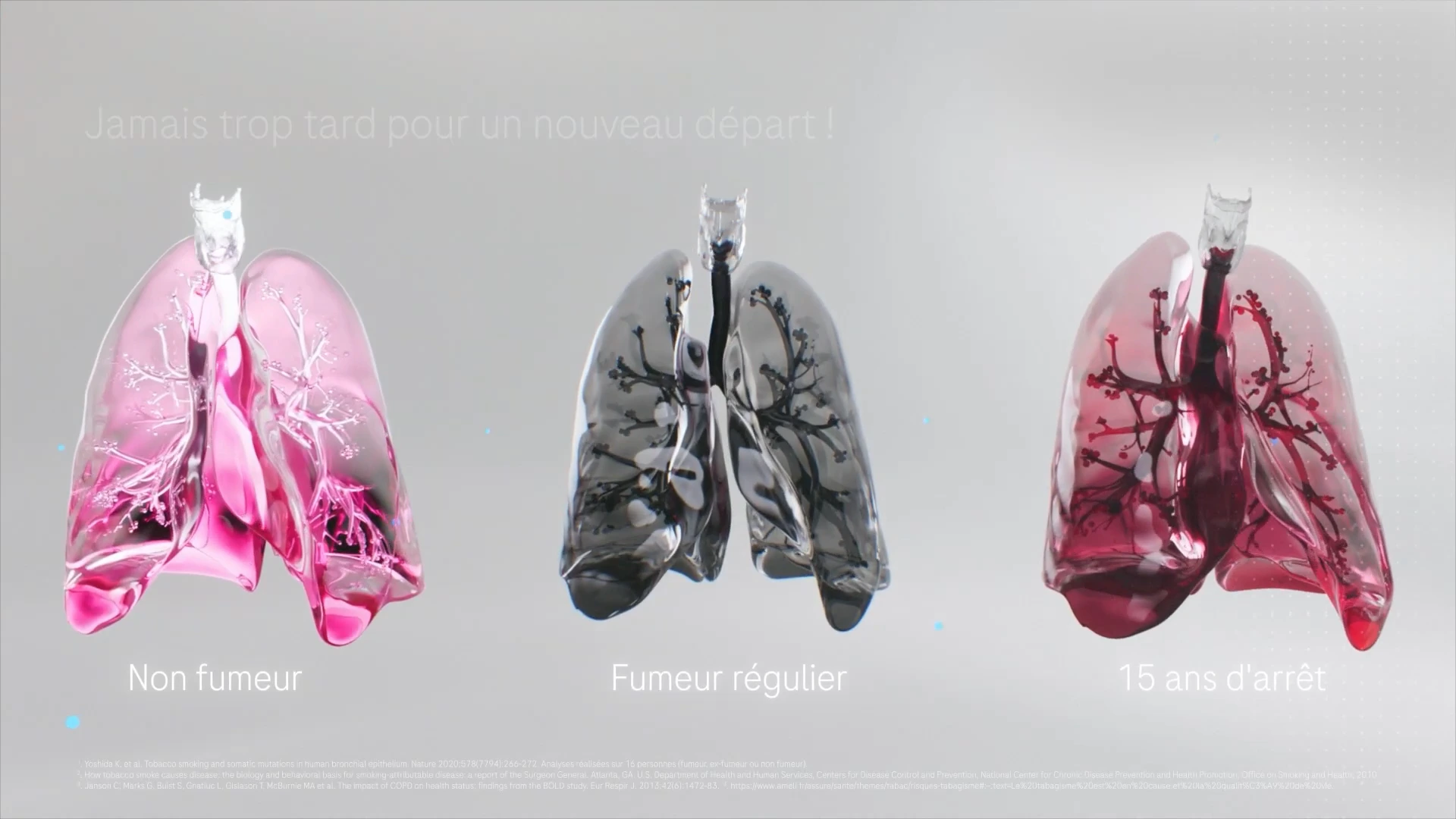
Animation shows a before and an after: how a disease progresses, what a treatment does, the benefit of changing a habit. The same organ, modeled once, moves from one state to the next in front of the viewer.
In the Novembre Perle film, the lungs of a non-smoker, of a regular smoker and of someone who has quit follow one another, then end up side by side.
Explain a mechanism of action
For a treatment, a mechanism of action animation shows the target, the molecule and what it triggers, in order. Doctors see it at congresses, in meetings with a medical rep or on the product website.
The animation does not replace the scientific content: the company’s medical team supplies the data, then approves each step, from storyboard to final render.
A medical device, a gesture
Inhaler, injector pen, sensor: animation shows the inside of the device through a transparent shell and the gesture to make, step by step, from the right angle. The model starts from the manufacturer’s CAD file.
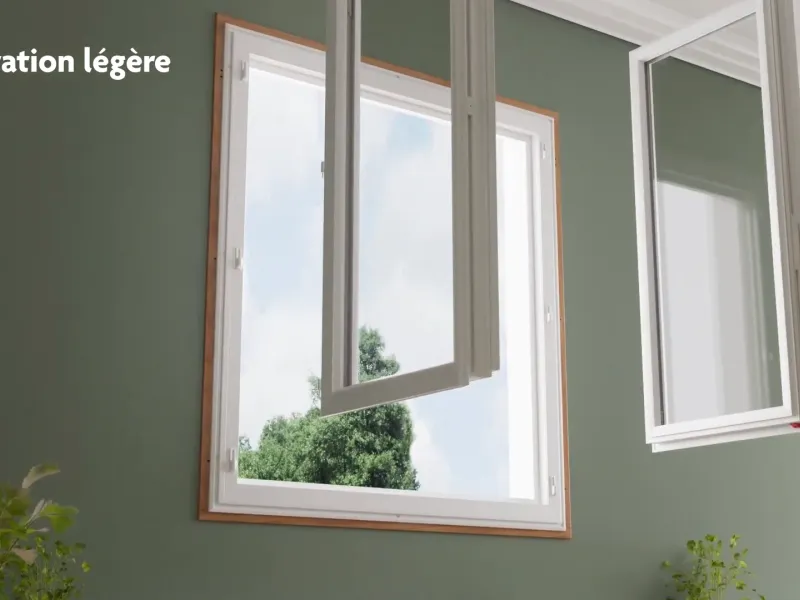
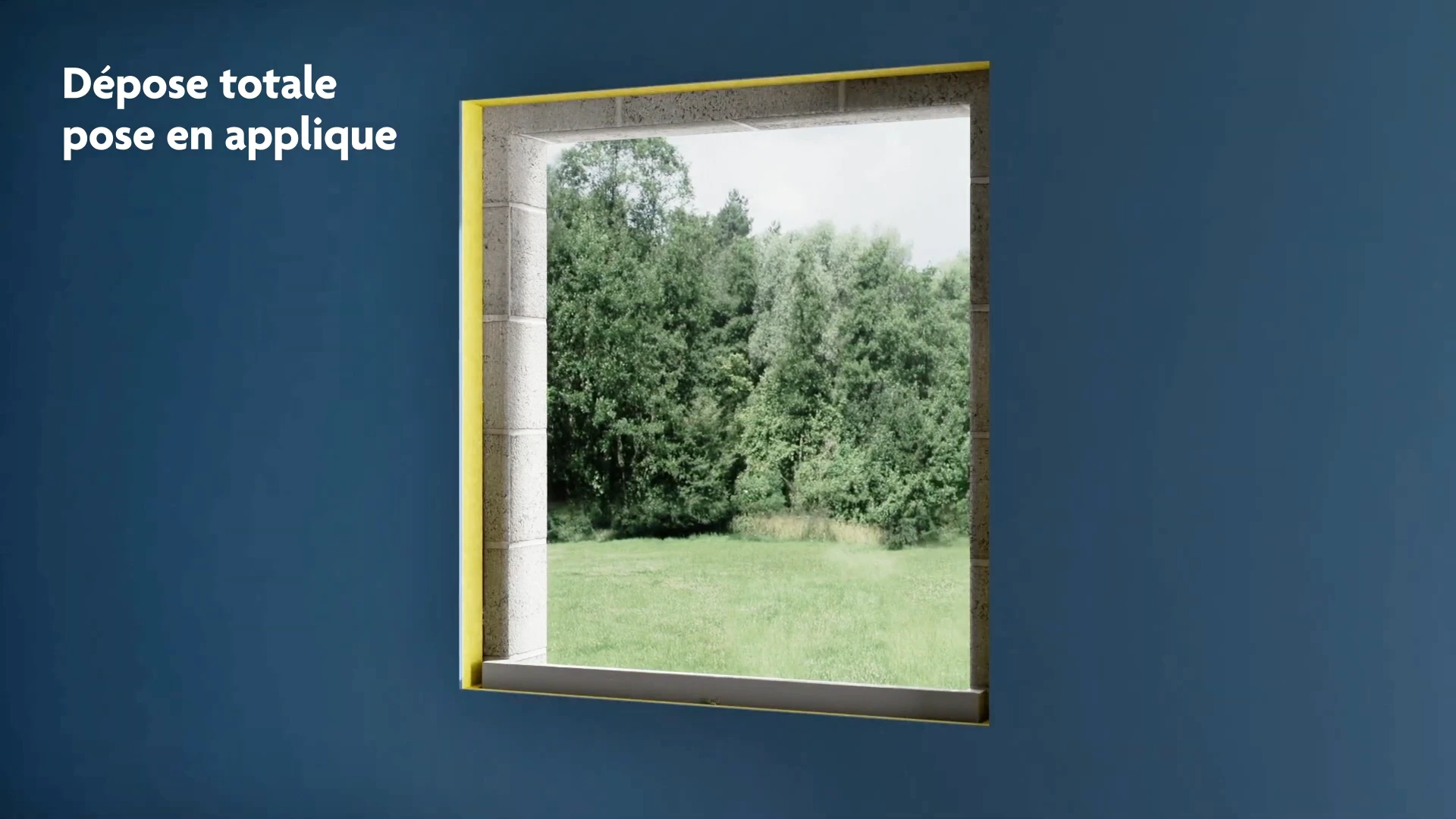
It is the same logic as my product demonstration films, such as the one for Pasquet Menuiseries, which shows a window being installed step by step.
Which style to choose: educational or semi-realistic
My advice for healthcare: an educational or semi-realistic style. The shapes follow the anatomy, so the organ is recognizable; materials, colors and details are simplified, so the eye goes to the message.
A photorealistic anatomical render can shock the general public and bury the key point in detail. A diagram that is too flat loses volume and where the organs sit. Semi-realism keeps what helps understanding and removes the rest.
Research points the same way, with caution. A review published in 2021 in Educational Psychology Review notes that realism can help, but that in several studies more abstract illustrations led to better results. Its authors break realism down into three independent settings: geometry, shading and rendering. Semi-realism keeps accurate geometry and simplifies the other two.
What regulation changes for production
In France, an advertisement for a medicine needs an ANSM visa, PM for healthcare professionals or GP for the general public, filed during set periods each year. In the United States, promotional materials are submitted to the FDA with Form 2253 when first used, and must present benefits and risks in a fair balance.
For production, this means: building medical, legal and regulatory review time into the schedule, receiving the text and mandatory statements from the client, and keeping on-screen text on separate layers so it can be corrected without re-rendering. This is not regulatory advice: compliance remains the company’s responsibility.
What I offer
I handle the art direction and all the 3D, in Cinema 4D and Octane: modeling, simulation, animation, shaders and renders. You approve still images before animation, then the animation before the final renders.
I work for pharmaceutical companies and for healthcare communication agencies, directly or as a subcontractor, under NDA depending on the contract. An animation up to 15 s costs €900 to €1,800 excl. VAT; a longer film is quoted.
Where this information comes from
Research: A. Skulmowski, S. Nebel, M. Remmele and G. D. Rey, “Is a Preference for Realism Really Naive After All?”, Educational Psychology Review, 2021; A. Skulmowski, “Realistic details impact learners independently of split-attention effects”, Cognitive Processing, 2023, which concludes that the effects of realism remain partly unpredictable. Abstracts read on October 27, 2026.
Regulation: ANSM pages on advertising visas for medicines and the October 22, 2025 decision setting the 2026 filing periods; the FDA page on submitting Form 2253 to OPDP; section 202.1 of Title 21 of the Code of Federal Regulations on fair balance between benefits and risks. Read on October 27, 2026.